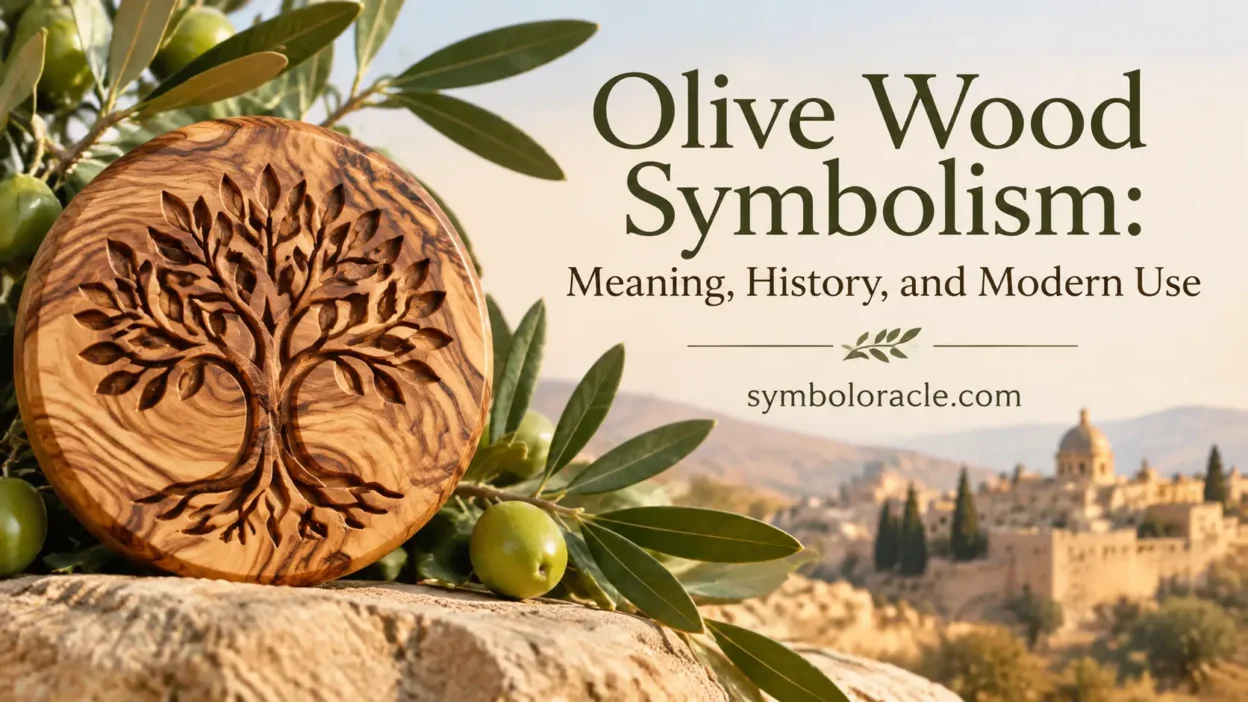
Olive wood symbolism is connected with peace, resilience, faith, and connection to nature. From handcrafted items to religious objects and home décor, olive wood carries meanings shaped by thousands of years of human interaction with the olive tree. In modern American culture, people often choose olive wood because it represents harmony, endurance, and appreciation for natural materials.
The olive tree has a unique place in human history because it can survive difficult environments and continue producing fruit for generations. Its wood reflects the same ideas associated with the tree itself: patience, stability, and renewal. These meanings have developed through Mediterranean traditions, religious stories, art, and everyday design.
Today, olive wood appears in kitchens, jewelry, furniture, gifts, and decorative objects. Many Americans view it as a symbol of natural beauty and a reminder of lasting values rather than simply a type of material.
Quick Answer
Olive wood symbolism commonly represents peace, strength, and connection to nature in modern American culture, especially in home décor, gifts, and personal items. Historically, olive wood has also been associated with faith, prosperity, endurance, and reconciliation across Mediterranean and religious traditions.
TL;DR
- Olive wood represents peace and harmony.
- Ancient cultures valued olive trees for endurance.
- Americans use olive wood in meaningful designs.
- Religious traditions connect it with faith.
- Its natural patterns symbolize individuality.
- Modern uses include décor and personal gifts.
What Olive Wood Looks Like and Where People Find It
Olive wood comes from olive trees, which are widely grown around the Mediterranean region and in parts of California and other warm climates. The wood is known for its dense texture, golden-brown color, and distinctive swirling grain patterns.
Unlike many types of wood that have a uniform appearance, olive wood often contains natural variations. Dark lines, irregular shapes, and changing shades make each piece look different. This uniqueness has helped the material gain symbolic associations with individuality and natural authenticity.
People commonly encounter olive wood in:
- Cutting boards and kitchen utensils
- Bowls and serving pieces
- Religious carvings
- Jewelry and accessories
- Furniture accents
- Decorative sculptures
- Handmade gifts
In the United States, olive wood products are often chosen by people who appreciate craftsmanship, sustainable materials, and objects with a story behind them.
What It Commonly Means in the United States
In modern American culture, olive wood is most often connected with peace, balance, and appreciation for nature. These meanings come partly from the olive tree’s long association with harmony and partly from the growing interest in natural materials and mindful design.
Many Americans recognize the olive branch as a symbol of peace, and olive wood naturally carries some of the same associations. A handcrafted olive wood item can communicate a desire for calm living, respectful relationships, and connection with the natural world.
The symbolism also connects with durability. Olive trees can live for hundreds of years, and their ability to survive drought and harsh conditions has made them a symbol of persistence.
Common modern meanings include:
- Peace and reconciliation
- Strength through challenges
- Natural beauty
- Family connection
- Patience and growth
- Respect for tradition
Ancient Roots and Early Symbolism of Olive Trees
The symbolic importance of olive wood began with the olive tree itself. Ancient Mediterranean societies depended on olive trees for food, oil, medicine, lighting, and trade. Because the tree supported daily life, people developed strong cultural connections with it.
In ancient Greece, the olive tree represented wisdom, victory, and prosperity. The olive wreath became a respected symbol given to champions in athletic competitions. The tree was also connected with the goddess Athena, who represented wisdom and strategy.
Ancient Romans continued many olive traditions. Olive oil became an important economic resource, and olive branches were used as signs of peace and negotiation.
The meaning of olive wood developed from this broader relationship with the olive tree. Since the tree provided practical benefits while surviving for generations, it became linked with stability and continuity.
Olive Wood Symbolism in Religious Traditions
Olive wood holds an important place in several religious traditions, especially Christianity, Judaism, and Islam. The olive tree appears frequently in religious texts and cultural practices, where it often represents blessing, peace, and spiritual connection.
In Christianity, the olive branch is associated with peace and reconciliation. The story of Noah’s Ark includes a dove returning with an olive leaf, which many Christians interpret as a sign of hope and the end of hardship.
Olive trees are also connected with important biblical locations. The Mount of Olives near Jerusalem has religious significance because of its connection to events in the life of Jesus.
In Judaism, olive oil played an important role in rituals and traditions. The olive tree became associated with light, wisdom, and divine blessing.
In Islamic traditions, the olive tree is respected as a meaningful creation. Olive oil has cultural and historical importance, and the tree is often connected with goodness and abundance.
These religious associations influence how many people understand olive wood today, especially when they purchase carved crosses, ornaments, or handmade religious items.
Why Olive Wood Represents Peace and Reconciliation
The connection between olive wood and peace comes mainly from the olive branch, which has been used for centuries as a sign of agreement and the end of conflict.
In ancient societies, offering an olive branch could communicate a willingness to resolve disagreements. Over time, this image became widely recognized around the world.
In the United States, the phrase “extend an olive branch” is commonly used when someone wants to repair a relationship or create understanding. Because of this cultural connection, olive wood objects can carry a message of friendship and cooperation.
People may choose olive wood gifts for:
- Weddings
- Housewarmings
- Religious celebrations
- Friendship occasions
- Peace-related events
The symbolism does not mean that every olive wood object has a fixed meaning. Instead, people often attach personal messages of kindness, unity, or respect to items made from this material.
The Emotional and Psychological Meaning of Olive Wood
Natural materials often influence how people experience a space, and olive wood is especially valued for its warm appearance and organic texture.
Many people associate olive wood with feelings of comfort and stability because it comes from a living tree with a long lifespan. The visible grain patterns remind people that natural objects can contain imperfections while still being beautiful.
From a psychological perspective, olive wood can represent:
- A slower, more intentional lifestyle
- Appreciation for craftsmanship
- Connection with nature
- Memories and family traditions
- Emotional balance
In American homes, handmade wooden objects often serve as reminders of personal values. An olive wood bowl or carving may represent more than decoration because the owner may connect it with travel, heritage, faith, or meaningful relationships.
Olive Wood in American Culture and Everyday Life
In the United States, olive wood is often appreciated because it combines practical usefulness with a sense of history. Unlike mass-produced materials, handmade olive wood objects usually highlight craftsmanship, natural variation, and connection to traditional methods.
Many Americans encounter olive wood through kitchen products such as cutting boards, spoons, bowls, and serving trays. These items are valued not only for their durability but also because the wood creates a warmer feeling compared with metal or plastic products.
The symbolism of olive wood in American homes often reflects ideas such as:
- Peaceful living
- Respect for nature
- Family gatherings
- Simplicity
- Appreciation for handmade work
A person may choose an olive wood serving bowl because it feels connected to shared meals and hospitality. A decorative carving may represent faith, travel memories, or admiration for Mediterranean culture.
The meaning usually comes from the relationship between the object and the owner rather than from the material alone.
Olive Wood Symbolism in Weddings and Gifts
Olive wood is frequently used in meaningful gifts because its associations with peace, commitment, and lasting relationships fit many special occasions.
For weddings, olive wood can represent a relationship built on patience and endurance. Since olive trees can continue growing for many years, some people connect the wood with the hope that a marriage will remain strong through changing seasons.
Common olive wood wedding gifts include:
- Engraved keepsakes
- Serving boards
- Jewelry boxes
- Decorative carvings
- Religious items
In American gift culture, natural materials often communicate thoughtfulness. An olive wood item can feel personal because each piece has different grain patterns and a handmade appearance.
The symbolism is especially common among people who prefer meaningful gifts instead of generic products.
Why Olive Wood Appears in Jewelry and Personal Style
Olive wood jewelry has gained attention among people who prefer natural accessories. Rings, bracelets, pendants, and beads made from olive wood often carry symbolic meanings related to simplicity and connection with the earth.
Unlike precious metals, olive wood does not represent wealth or status in the traditional sense. Instead, it often represents authenticity and personal values.
People may wear olive wood jewelry to express:
- Love of nature
- Spiritual connection
- Cultural appreciation
- A peaceful lifestyle
- Individual identity
The unique grain also makes each piece visually different. This quality supports the idea that every person has a distinct story and identity.
In modern American fashion, natural materials are often linked with sustainable choices and personal expression.
Olive Wood in Tattoos and Body Art
Although olive wood itself is less common as a tattoo subject than the olive branch or olive tree, its symbolism overlaps with these popular designs.
An olive tree tattoo may represent peace, growth, family roots, or overcoming challenges. When people include wood textures, roots, or carved olive branches, they often focus on themes of stability and connection.
Common meanings behind olive-inspired tattoos include:
| Tattoo Element | Common Meaning |
|---|---|
| Olive branch | Peace and reconciliation |
| Olive tree roots | Family history and stability |
| Olive leaves | Renewal and hope |
| Olive wood texture | Endurance and natural strength |
In the United States, tattoo meanings are highly personal. One person may choose an olive tree design because of religious beliefs, while another may choose it because it represents personal growth.
The same image can carry different meanings depending on the person’s experiences.
Olive Wood in Home Décor and Interior Design
Olive wood has become popular in home décor because of its appearance and natural character. Interior designers and homeowners often use it to create spaces that feel warm, organic, and connected to nature.
Olive wood décor may include:
- Bowls
- Wall art
- Sculptures
- Frames
- Furniture details
- Decorative objects
The symbolism in home design often reflects a desire for balance between modern life and natural elements.
Many American homes use wood décor to create comfortable spaces. Olive wood adds another layer because its history and cultural associations can make a simple object feel meaningful.
A decorative olive wood piece may remind someone of:
- Peaceful environments
- Family traditions
- Travel experiences
- Religious heritage
- Natural beauty
Cross-Cultural Meanings of Olive Wood
Although olive wood has strong Mediterranean roots, its meanings have spread across many cultures. Different communities have developed their own interpretations based on religion, history, and local traditions.
Mediterranean Traditions
Mediterranean cultures have maintained strong connections with olive trees because olives provided food, oil, medicine, and economic value. The tree became associated with survival, prosperity, and community life.
Ancient Greek Culture
Greek traditions connected the olive tree with wisdom and achievement. Olive wreaths represented honor and victory, especially in athletic and cultural events.
Middle Eastern Traditions
Across the Middle East, olive trees have been important symbols of land, family, and continuity. Many communities view ancient olive trees as reminders of connection between generations.
Religious Communities
Jewish, Christian, and Islamic traditions all recognize the importance of the olive tree. These interpretations often emphasize blessing, peace, light, and spiritual reflection.
Modern Global Meaning
Today, olive wood has become an international symbol. People around the world use it in art, design, gifts, and personal objects because they connect with its themes of endurance and harmony.
The Connection Between Olive Wood and Sustainability
Modern discussions about natural materials have added new meanings to olive wood. Many consumers are interested in products that feel environmentally responsible and connected to traditional craftsmanship.
Olive wood often comes from trees that no longer produce enough olives for farming. Using the wood can give another purpose to the tree after its agricultural life.
This has influenced how some Americans view olive wood products. The material may represent:
- Responsible consumption
- Respect for natural resources
- Traditional craftsmanship
- Reducing waste
However, sustainability depends on how the wood is harvested and produced. The symbolic value of olive wood is strongest when the production process respects environmental and ethical standards.
Common Misunderstandings About Olive Wood Symbolism
Olive wood has many positive associations, but some interpretations can become exaggerated or inaccurate.
One common misunderstanding is that olive wood automatically carries spiritual power. While many traditions connect olive trees with religious or cultural meanings, the wood itself does not have a universal meaning shared by every person.
Another misunderstanding is assuming that olive wood represents only peace. Peace is one important association, but the symbol also includes ideas of endurance, heritage, nature, and resilience.
People may also confuse olive wood symbolism with olive branch symbolism. They are related, but they are not exactly the same.
- Olive branch symbolism focuses mainly on peace and reconciliation.
- Olive wood symbolism includes the material’s connection with nature, craftsmanship, and lasting traditions.
Understanding these differences helps people appreciate the symbol more accurately.
How Olive Wood Symbolism Has Changed Over Time
The meaning of olive wood has developed as human relationships with the olive tree have changed.
In ancient societies, the olive tree represented survival and practical importance because it provided essential resources. Religious traditions later expanded its meaning by connecting it with faith and spiritual ideas.
In modern times, olive wood has gained additional meanings connected with lifestyle choices, design, sustainability, and personal identity.
The symbol has moved from being mainly connected with agriculture and religion to becoming part of global culture and everyday design.
Today, olive wood can represent several ideas at once:
- Ancient traditions
- Modern environmental awareness
- Personal memories
- Cultural connection
- Peaceful living
Its meaning continues to evolve because people use it in new contexts while still respecting its historical roots.
Olive Wood Symbolism Across Different Contexts in the USA
| Context | Meaning in the USA | Common Associations | Notes |
|---|---|---|---|
| Home décor | Peaceful and natural living | Warmth, craftsmanship, balance | Often used in kitchens and decorative pieces |
| Religious items | Faith and spiritual connection | Hope, blessing, reconciliation | Common in Christian communities |
| Gifts and weddings | Lasting relationships | Commitment, friendship, family | Chosen for meaningful occasions |
| Jewelry and tattoos | Personal values and identity | Nature, resilience, simplicity | Meanings depend on the wearer |
| Sustainable products | Respect for nature | Responsible choices, tradition | Connected with handmade goods |
Frequently Asked Questions About Olive Wood Symbolism
What does olive wood symbolize?
Olive wood commonly symbolizes peace, endurance, and connection with nature. In modern American culture, people often associate it with handmade craftsmanship, family traditions, and a calm lifestyle.
Its meaning also comes from the long history of the olive tree in Mediterranean cultures and religious traditions.
Why is olive wood considered meaningful in Christianity?
Olive wood is meaningful in Christianity because the olive tree appears in important biblical stories and locations. It is often connected with peace, hope, prayer, and reconciliation.
Many Christian communities value olive wood carvings because they represent a connection to places and traditions associated with biblical history.
What does an olive wood tattoo mean?
An olive wood or olive tree tattoo can represent peace, personal growth, resilience, and family roots. The exact meaning depends on the person’s experience and reason for choosing the design.
Some people choose it for religious reasons, while others connect it with overcoming challenges or living in harmony with nature.
Is olive wood a positive or negative symbol?
Olive wood is generally viewed as a positive symbol. It is most commonly connected with peace, strength, renewal, and harmony.
However, symbolic meanings can vary between cultures and individuals. Some people may focus more on its historical or religious importance rather than a specific emotional meaning.
Why do people use olive wood in home décor?
People use olive wood in home décor because of its attractive grain patterns and connection with natural materials. It can create a warm atmosphere while representing simplicity, tradition, and appreciation for craftsmanship.
Many homeowners choose olive wood pieces because they feel unique and personal compared with factory-made decorations.
Does olive wood have the same meaning as an olive branch?
Olive wood and olive branches share some meanings, especially peace and reconciliation, but they are not identical symbols. The olive branch is more directly associated with peace, while olive wood also represents endurance, nature, and craftsmanship.
What makes olive wood different from other types of wood?
Olive wood stands out because of its unusual grain patterns, durability, and cultural history. Each piece often has a different appearance, which makes it popular for handmade products and meaningful objects.
Conclusion
Olive wood carries meanings shaped by nature, culture, religion, and human craftsmanship. In the United States, it is commonly understood as a symbol of peace, resilience, and a connection to natural beauty. Its value comes not only from its appearance but also from the traditions and stories connected to the olive tree.
From religious carvings and wedding gifts to kitchen tools and home decorations, olive wood continues to represent ideas that people find meaningful in everyday life. Its long history shows how a simple natural material can become connected with identity, memory, and shared values.
Whether used as décor, jewelry, or a personal keepsake, olive wood symbolism reflects a lasting appreciation for harmony, endurance, and the relationship between people and the natural world.


